Planting for the Future: Andrew Rowlett's Cover Crop Journey
22 October, 2026
The Challenge
Farmland’s value starts with its soil. Healthy, well-structured ground supports consistent yields, attracts strong tenants, and holds its value over time. Soil that is compacted, eroded, or overly dependent on inputs can slowly lose that value, often in ways that don’t show up until years later.
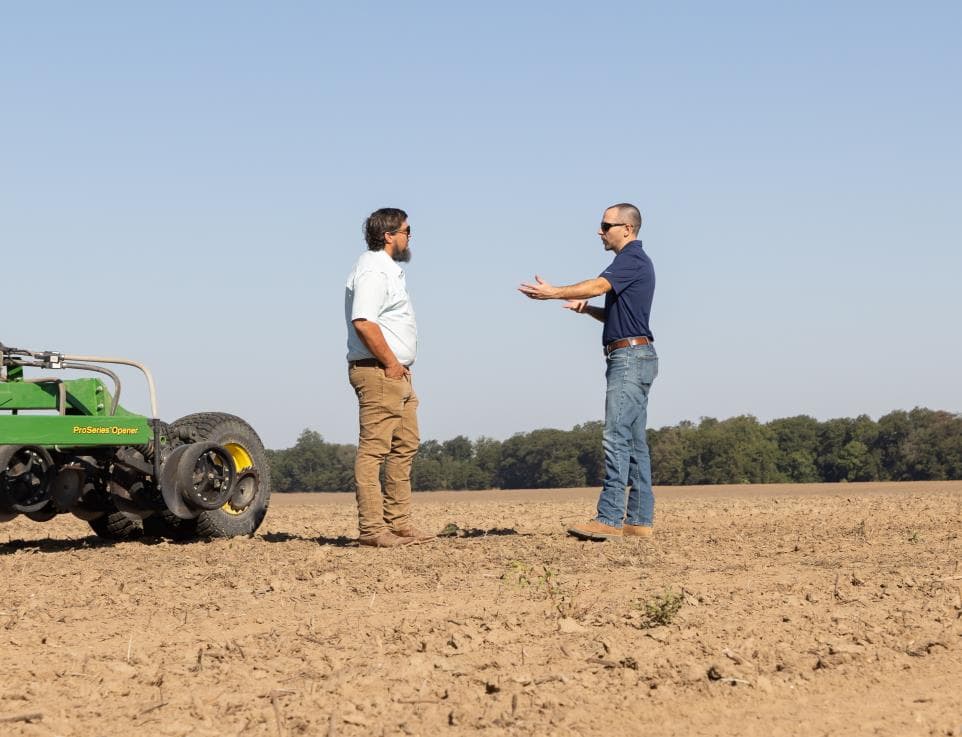
At LandFund Partners, caring for that soil is a matter of creation care, and it is essential to the firm’s investment strategy. That commitment is now taking root with one of LandFund’s newest farmers, Andrew Rowlett, to launch cover crops as the first step in a regenerative farming plan for the property.
For decades, conventional farming in the Mid-South relied heavily on chemical and synthetic inputs to protect yields. Andrew, a 37-year-old Northeast Arkansas farmer, grew up with that approach. It delivered results, but it also brought rising input costs and soils left bare and exposed to erosion between seasons.
While the average American farmer is 58 years old, growers of every generation are now turning to regenerative agriculture, an approach focused on rebuilding soil health by keeping ground covered, maintaining living roots, and increasing crop diversity. Many of LandFund’s tenant farmers, including some with decades of experience, have adopted regenerative practices after years of farming conventionally. Andrew is part of that same movement. With a long career still ahead of him, he is investing in the ground he expects to farm for decades to come.
The Approach
LandFund’s local farm managers work alongside each tenant to build a regenerative plan tailored to the farm. Together, they assess the soil, identify areas prone to compaction or erosion, and choose practices that fit both the land and the farmer’s operation. The goal is a shared plan that improves the ground over time while keeping the farm productive and profitable.
On Andrew’s farm, that plan starts with cover crops, one of the cornerstones of regenerative agriculture. This season, Andrew is planting daikon radishes. The radish’s deep taproot breaks up compacted soil, and the plant captures nutrients that might otherwise be lost. As it decomposes, it leaves channels that help water and roots move deeper into the ground.
From there, Andrew is potentially looking to expand the mix with cereal rye, known for holding soil in place and suppressing weeds, along with other brassicas. Adding more species to the rotation reflects another core regenerative principle: diversity above ground supports healthier, more resilient soil below it.
The Outlook
Regenerative agriculture is a long-term strategy. Improvements in soil structure and fertility build gradually, season over season, and both Andrew and LandFund approach the work with that horizon in mind. Farm managers will continue checking in throughout the year, tracking how the ground responds and adjusting the plan as they learn what the soil needs. The goal is ground that requires fewer inputs, stands up better to heavy rain and erosion, and becomes more productive over time.
Why It Matters
For a landowner, the condition of the soil is the condition of the asset. Farmers who adopt regenerative practices help protect the productivity and long-term value of the land they work. Lower input costs also strengthen a farmer’s operation, which supports the kind of stable, long-term relationship that benefits both the farmer and the landowner.
That’s why LandFund values working with farmers who share a long-term commitment to the land. When the people working the ground care about its future, that care tends to benefit everyone with a stake in it.
LandFund Partners acquires and stewards farmland across the Mid-South, creating opportunities for the next generation of American farmers. By partnering with growers who embrace regenerative practices and invest in the long-term health of their soil, LandFund helps ensure the land stays productive for generations to come.
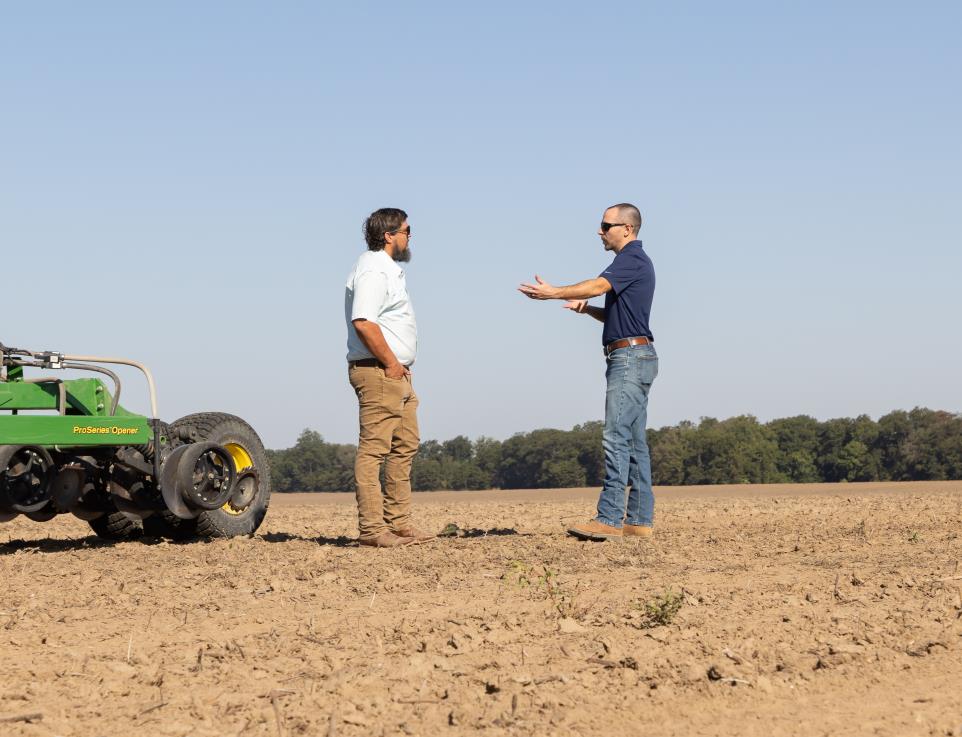
LFP Farm Manager with tenant farmer discussing regenerative cover crops to improve soil health.
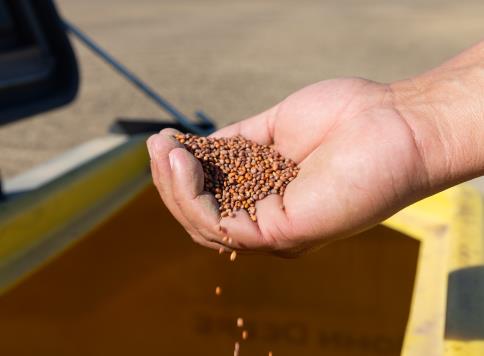
Daikon radish seed before planting
